The one where our protagonist realizes he hasn’t published a blog post since November of last year and becomes paralyzed by the realization that he has nothing of note to write about, aside from a health update. Which is a great problem to have, given the circumstances.
So. I’ve been on medical leave from work for 4 months now, as I undergo treatment for lymphoma. I’ve finished round 4 and am gearing up for round 5 next week - then only one more round after that before recovering a bit and returning to work in mid-august.
A focus on institutional learning innovation may involve the decision that all new classroom spaces and renovations will result in active learning spaces, with flat floors and moveable furniture. Or it may revolve around an initiative to embed academic librarians with professors throughout the course development, teaching, and redesign process.
…
One example comes from the world of online learning. On its own, an online learning program is not all that innovative. What is innovative is when the school tries to figure out how to bring the lessons, methods, techniques, and resources from online courses to residential courses.MOOCs are not innovative. What would be innovative is to leverage what is learned from MOOCs to improve traditional online and residential courses.
McDavid, L., Carleton Parker, L., Burgess, W., Robertshaw, B., & Doan, T. (2018). The Combined Effect of Learning Space and Faculty Self-Efficacy to use Student-Centered Practices on Teaching Experiences and Student Engagement. Journal of Learning Spaces, 7(1). Retrieved from http://libjournal.uncg.edu/jls/article/view/1597
Instructors who teach well in one kind of learning space don’t magically translate that ability into teaching well in another kind of learning space. They need support/PD/consultation when moving, say, from a lecture hall to a flexible learning space (or vice versa?).
I was asked to pull together some links to resources that can be used to get started in evaluating learning spaces - how are they used? how effective are they? what kinds of interactions are enabled by the spaces? etc. There are some great resources - best to share the list here rather than just in an email…
EDUCAUSE has some really fantastic resources on evaluating learning spaces. They have a book full of concepts and case studies:
A long, roaming article in The New Yorker on Anthony Levandowski’s groundbreaking/questionably-ethical work on self driving cars. This is a guy that used to report to Sebastian Thrun, and it makes me wonder how much of this ethos is already pervasive in Silicon Valley Edtech™…
After bypassing restrictions on how to hire staff, purchase supplies (including hundreds of cars), and safely design and operate self-driving vehicles (resulting in serious injuries and property damage), this whopper gets laid:
I’ve been involved with edtech at my institution for… awhile. We’ve worked on many projects over the years, and one of the common problems has been related to authoring, publishing, and managing videos. It’s been left as an exercise to be solved by every individual, which has resulted in people publishing content in various platforms all over the internet.
Which is fine, until you realize that in doing so, they’re hosting university-related content for courses along with their dog videos and vacation videos and whatever else, in individual YouTube/Facebook/Vimeo accounts. And those platforms are injecting their own tracking and surveillance software to monitor who watches what and then connect it with their advertising platforms so you can be force-fed ads and algorithmic recommendations based on what you’ve watched1. And to vigorously defend the copyright claims of corporations by taking down legitimate academic content that legally contains clips of commercial media 2.
It’s weird. It was only last summer that the whole cancer thing happened, but it feels like so much longer. It went from a simple strange blood test to a confirmed strange blood test to every-single-blood-test-ever to a biopsy and CT scan and full diagnosis within a few weeks last year. I have trouble remembering a time before cancer. And now, it’s part of everything I do and think and feel.
I’ve been using the handy YD-Recent-Images plugin for awhile now, to generate the /photos page here on my site. It provides a widget that displays the latest n images uploaded in posts here - and provides a nice photostream view for my photoblogging here as well 1. The plugin hasn’t been updated for… 7 years!… but it works. I’ve been expecting it to start misbehaving over time, though.
The /photos page here on my site. Self-hosted photostreamy goodness.
As a university, we’ve had two major issues related to the use of the campus learning management system.
Sharing of personal information with third party services/companies1
Copyright of materials uploaded to courses, and subsequently downloaded and shared with third parties as per above. Copyright compliance is a pretty big deal at Canadian universities.
We needed a way to provide a reminder of university policies, to provide guidance about what is allowed and not allowed, and to document that people have acknowledged these.
It’s not a SPLOT per se, because it’s intended for use in face-to-face learning rather than online. SPLF2FT?
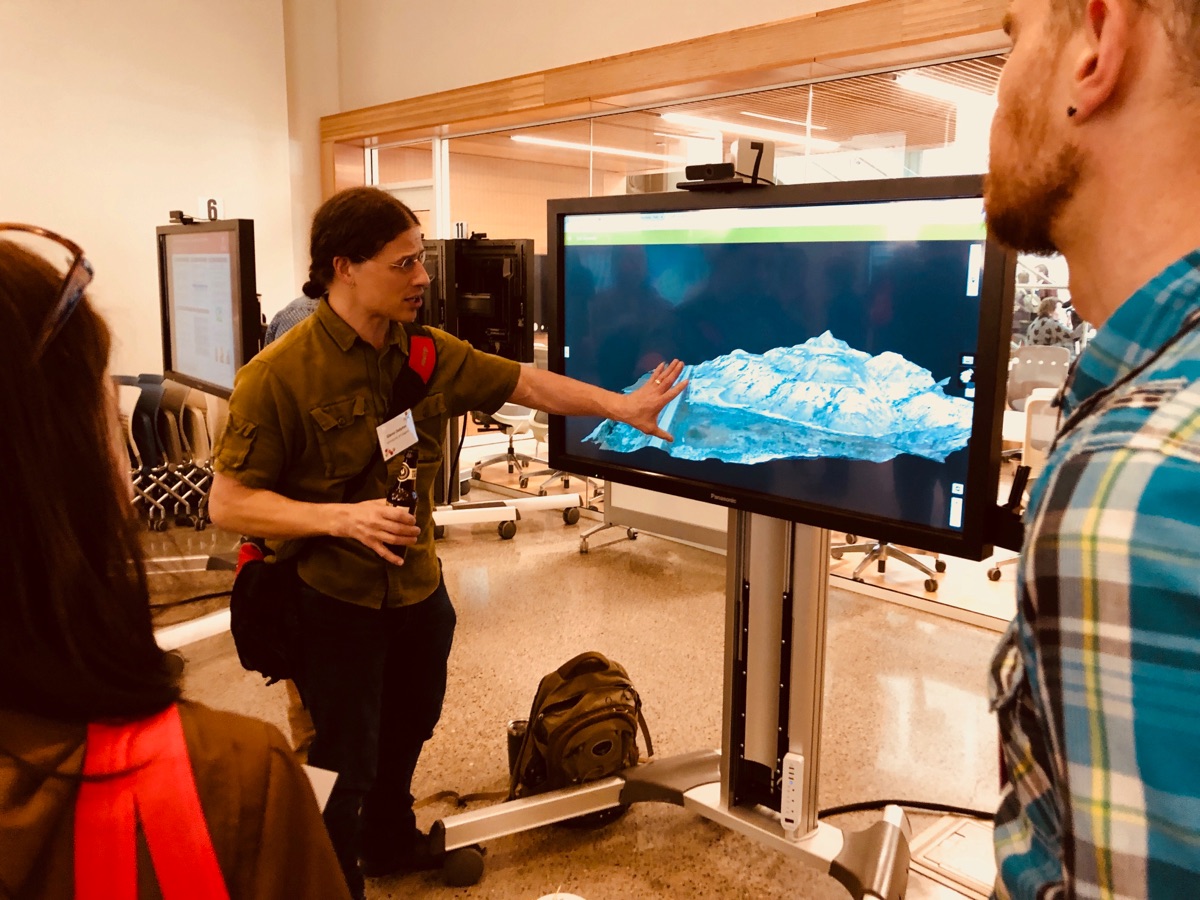
At the Taylor Institute, we have a bunch of active learning classrooms - we call them “learning studios”. They’re designed to enable active group collaboration, through the design of the rooms, to the furniture available, and the technology provided. There are 50" touch-enabled “collaboration carts” 1 that can run almost any web-based tool.
One of the more common uses of the displays involves digital whiteboards. Each display has an actual physical whiteboard beside it, but the digital whiteboard integrates with the AV systems that run the room. Which means we can do things like say “hey - group 1 is doing some cool stuff. check it out!” and push their display to the projector (or even to all other displays in the room) for everyone to see. Much harder to do with traditional whiteboards.
I’ve moved my webstuff back to Reclaim Hosting - I had been a very very happy customer, but decided I needed to move my sites onto canadian-hosted-and-managed servers out of principle. Since then, Reclaim spun up a Canadian-hosted server (but it’s managed by a US company, so there are still… complications). But, I’ve decided to stop caring so rigidly about that. It’s just my webstuff, and it’s far more important to be a part of the Reclaim family than it is to push back in an invisible way against the insanity that is running their country.
I’d picked up a copy of the book When Breath Becomes Air by Paul Kalanithy after reading a reference to it in a NYTimes article about John McCain, and Grant gave me the nudge to actually start reading it. It’s an amazing read, about a young neurologist/budding neuroscientist, who spends his life learning about the nature of life, and death, by experiencing it.
I’m thankful that the decisions I’m faced with are happening in slow motion compared to his story, but the effects are largely the same. I’m afraid of so many things now - most notably, of leaving J. alone after putting her through the ringer.