a week in sicamous
We headed to the Sicamous area for a week away. I could totally get used to lake country…

We headed to the Sicamous area for a week away. I could totally get used to lake country…
Long, rambling post ahead, fueled by summer vacation, campfires, and mosquito repellant…
I’ve been struggling with the sense of audience and connectedness through online tools for years now. This is one of the reasons I’ve had a tendency to delete accounts on various social networks, as I occasionally become uncomfortable with the deals involved in using them, and the artificially inflated sense of connection that they foster.
I follow 438 people on twitter right now, and over 1000 people follow me. Or, “follow,” as the online social media connection is fundamentally superficial and tenuous. I’m probably only really connected to a dozen or two of those people in any meaningful way, with relationships that I value. Some of those connections have developed into deep friendships lasting for over a decade now.
Read MoreI was just checking my RSS feeds, and saw an article from CBC News.

I thought to myself, “hey! I’ve seen that photo somewhere. wait a minute… I think I took that photo…”
Some quick poking around on my gallery site, and hey presto. Yup. I shot it back in June, 2009, not far from my house.
Looking at the article on CBC’s site, there doesn’t seem to be any mention of that fact.
Read MoreFirst, they provided a search engine. Then they monitored every search query, to push ads. Then, they added additional services, including email and RSS, to track everything you read and everyone you know. Then, they added social layers, to track everything you do. Then, they added DNS services, to be able to track everything you read and do, even outside of Google’s suite of monitoring tools aka online services.
Now, they want to lay their own fiber-to-the-home internet service. They say it’s to ensure network neutrality, and to provide a stable alternative to the big telecom companies’ cable and DSL and fiber services. That sounds awesome. Everyone hates the big telecom companies, always screwing us over and gouging us and etc.. etc…
Read MoreNick Heer (another Calgarian WordPress user!) posted a modified WordPress press-this.php file to enable Markdown syntax: Custom “Press This” — Pixel Envy.
custom press-this.php file has been updated to work with WordPress 3.4.
It really just modifies the core WordPress wp-admin/press-this.php file to use Markdown syntax, rather than raw HTML. Not elegant, and will need to be updated if that file changes in future versions of WordPress. But it works, and that’s all that counts.
Read MoreThe cumulative effect is clear: schools can rely more heavily on fair dealing for the copying that takes place on campus and in the classroom. This includes copies made by teachers for students for instructional purposes, copies that previously formed a core part of Access Copyright’s claim of the necessity of a license. Indeed, it will be very difficult for educational institutions to justify the Access Copyright license in light of this decision.
Read More
tl dr; run IE in 32-bit mode. Seriously. I know. That’s what I said, too.
I’ve been using Sharepoint 200712 with my group, to share information about groups and projects on campus. It’s been working, but we just started using the wiki tool3, and my inability to make the visual text editor turn on became really troublesome. I’d never been able to get the visual editor to show up. I looked in settings - the visual editor in Sharepoint 2007 is implemented as an ActiveX control4 so I made sure I was running Internet Explorer5 (IE9 on Win7). I made sure that I had ActiveX enabled, and that security settings would let it run. All set. Still, no visual editor. WTF?
Read MoreI’d been getting nervous, seeing the storage on our Hippie Hosting Co-op server filling up. We were over 80% full, with less than 18GB left until we were in serious trouble. So, I did some digging. I was getting ready to start deleting some of the bigger video files in my web hosting account, to make space. Turns out, that wasn’t necessary.
I use this to find directories that have lots of stuff in them:
Read MoreRob asked about the app I use for tracking my rides. I’ve been using Cyclemeter since April 2010, and have found it to be pretty much ideal for what I do. I don’t want to have all of my ride data stored on a third party server (insert tinfoil hat conspiracy here, or, failing that, something grumbling about people monetizing my life). I like that Cyclemeter stores the activity data on my phone, and only exports it when I want it to, in the formats I choose. For instance, here’s a view of the weekly data, going back to April 2010:
Read MoreCentennial hootenanny. We went on the hottest day of the year, with near record crowds. Didn’t buy a deep fried Oreo…

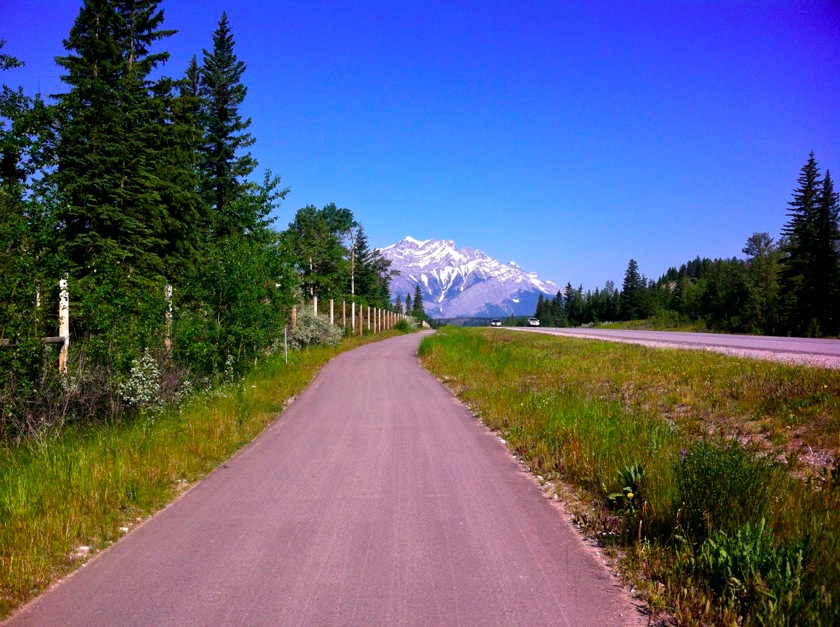
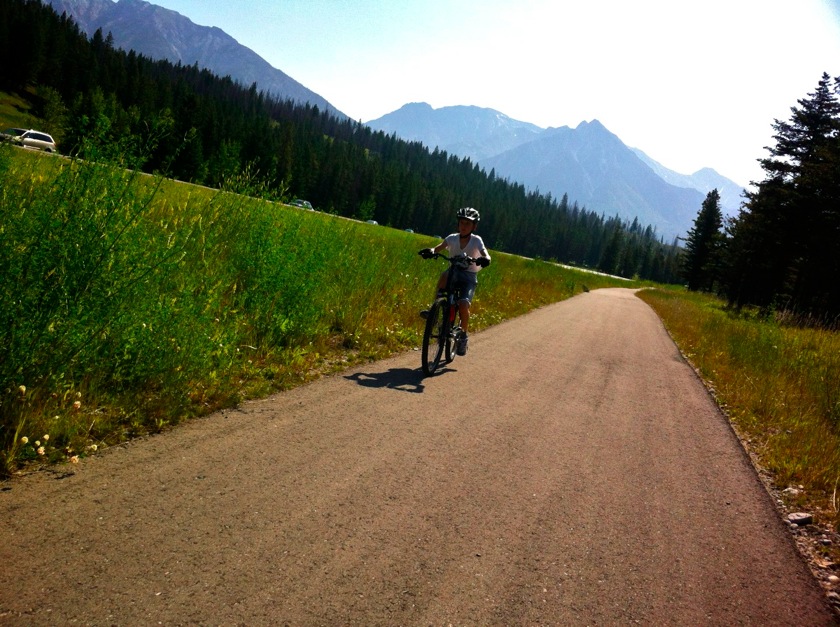
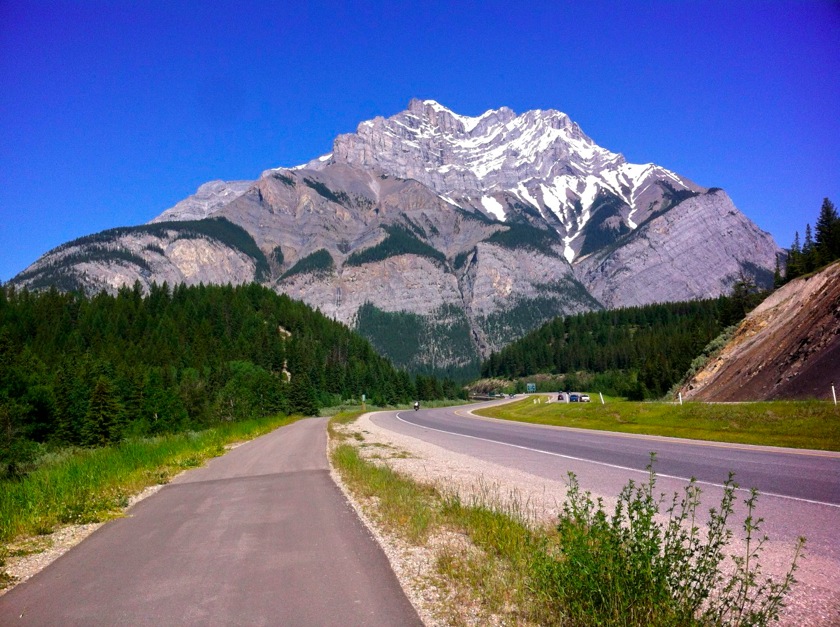
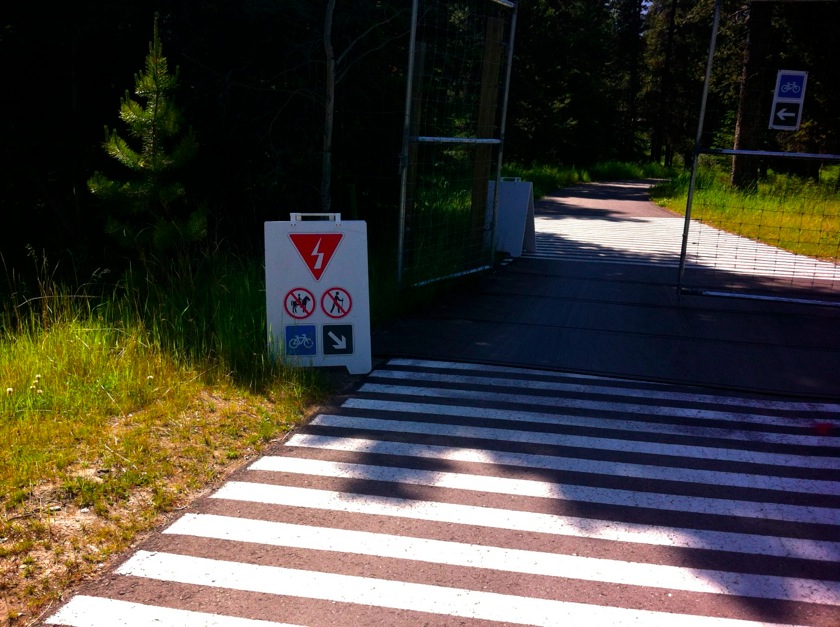
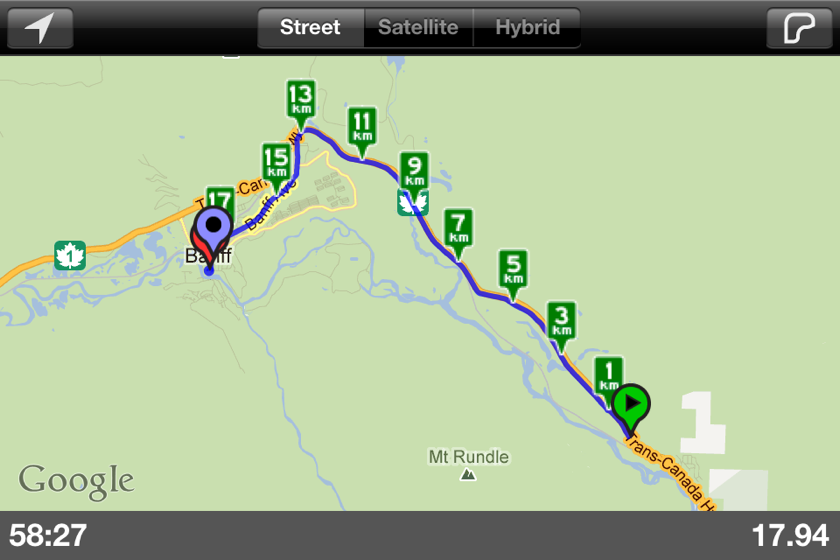
Evan and I rode from Canmore to Banff today, on the great pathway through the mountains. Not bad for a 9 year old…
I’d initially accidentally typed that we’d ridden from Cochrane to Banff. Oops. That would be a great ride, and maybe we’ll do that in a few years. But this was just Canmore (at the Banff Park gates) to the town of Banff…





From George’s great open letter:
I propose that the top 10 Canadian universities convene a meeting to plan a MOOC response that helps us to build our competence in this space. We already have universities devoted to online learning such as Athabasca University (disclaimer: that’s where I hang out) and Thompson Rivers. Partner with those systems as design and delivery partners as they have developed the technical infrastructure and pedagogical expertise for online learning. Even a small allocation of $5-10 million by assembled universities would produce a significant impact and increase the profile of Canadian higher education.
Read More