I started gathering some links to some good examples of engaging online interfaces to museum, library, historical and organizational collections, and figured it would be handy to post the growing list online as well.
Any other really good examples of these kinds of collections made available online? Ideally with interfaces that make it possible to view the collections in great detail, to reuse parts of the collection in new works, and/ to integrate with external resources.
I’ve been thinking about the distinction between filtering and curation lately. “Social media” is described as bringing a form of curation to the internet, when it is really providing layers of filtration. What’s the difference? Filtering is crap detection, wheat-from-chaff separation. Useful and important, but only the first step of curation. Curation is when a knowledgeable expert crafts an experience based on their understanding of context, in order to guide others through a collection. Curation is so much more than simple crap detection. Examples?
As the final requirement in the Conceptualizing Educational Technology course I took in W2010, I had to write a position paper on a topic of my choosing. I’ve been thinking about Gardner Campbell’s piece in EDUCAUSE Review, and wanted to dig a little deeper in that direction. The end result is still a bit rough (I polished it off early so I could submit it before leaving on vacation, and the APA formatting is likely utter shyte), and I had to skip entire sections I’d written in my head (I wanted to write about the obvious model demonstrated by Downes and Siemens in the Massive Open Online Course on Connectivism, but ran out of room and wanted to start with the examples of first steps before jumping into the “BYPASS THE INSTITUTION” angle).
How’s this for a first kick at the cat? Huge gaps, but I’m trying to avoid writing a 200 page definition full of acronyms and words requiring further definition…
Personally, I’m not a fan of the word “cyberinfrastructure” as it seems to make people glaze over in its made-up-wordness. But, it appears to have some legs. Whatever. I guess the next best thing to having a word that doesn’t suck, is having a crappy word with a half decent definition…
I’m riding in the Ride to Conquer Cancer again this year. It’s a 2 day, 200km ride south of Calgary through the foothills of the Rocky Mountains, June 26-27, 2010. Last year, we were able to raise nearly $7 MILLION for the Alberta Cancer foundation. I’m hoping we can top it this year. But I need your help.
Please sponsor me for the Ride. Every dollar helps. Every donation $10 and over gets a receipt for tax purposes (in Canada, anyway).
I just wastedspent the evening training the Faces feature of Aperture 3. Wow. It can’t put a name to a face automatically, but as you teach it, it’s spooky how well it does finding photos of people. I’ve been sitting here giggling at all of the photos I’d forgotten of people I care about. Great stuff.
What amazes me is how few pixels it seems to need to be able to recognize a face. It’s finding faces in group shots (of course), in crowds at hockey and football games (even if the shot is a wide angle photo with hundreds of people in it). It even finds faces in photographs pinned to the wall in the background of photos. Fun with recursion. It could also be a bit scary as a latent crowd identification system - but The Man has this stuff already…
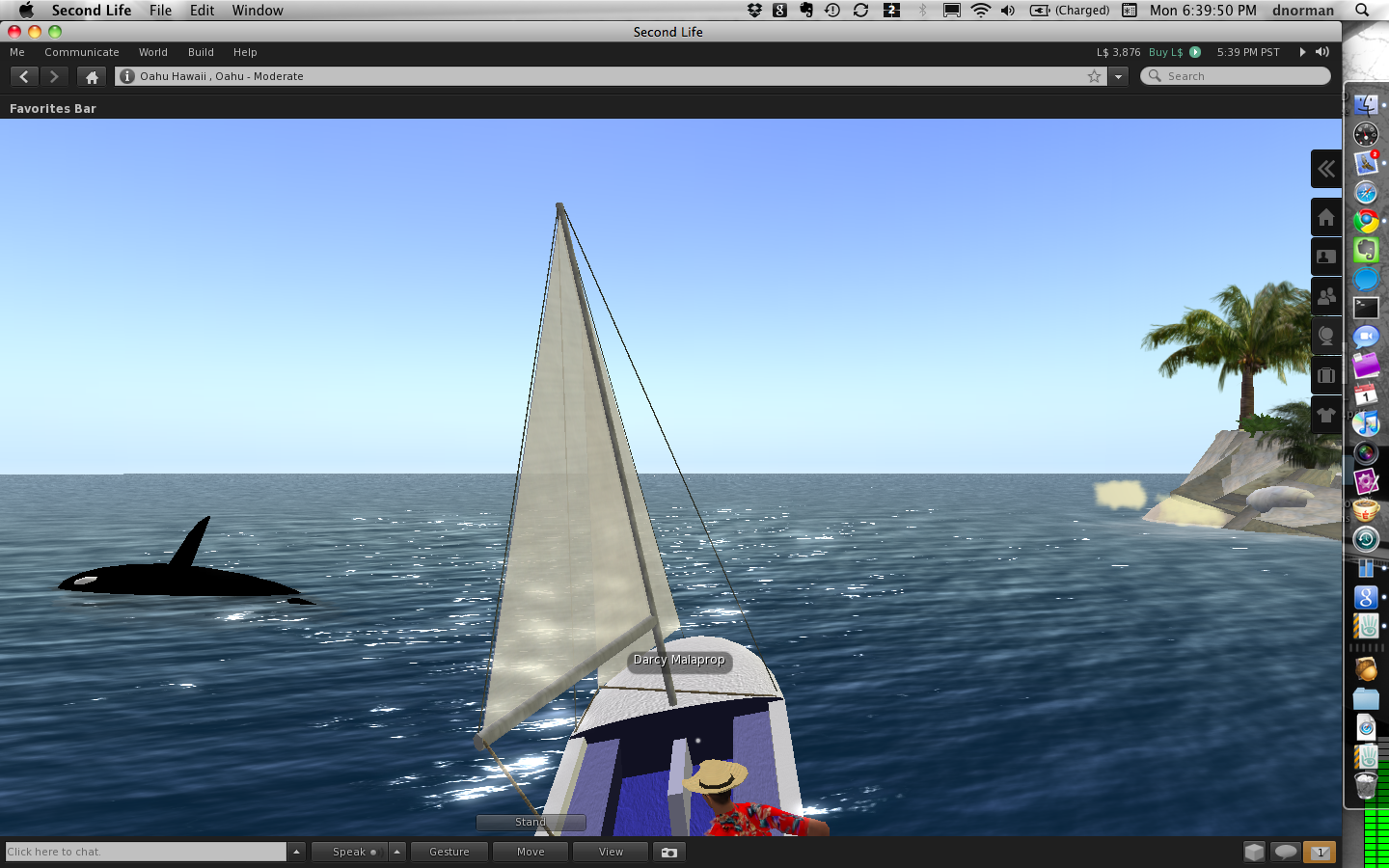
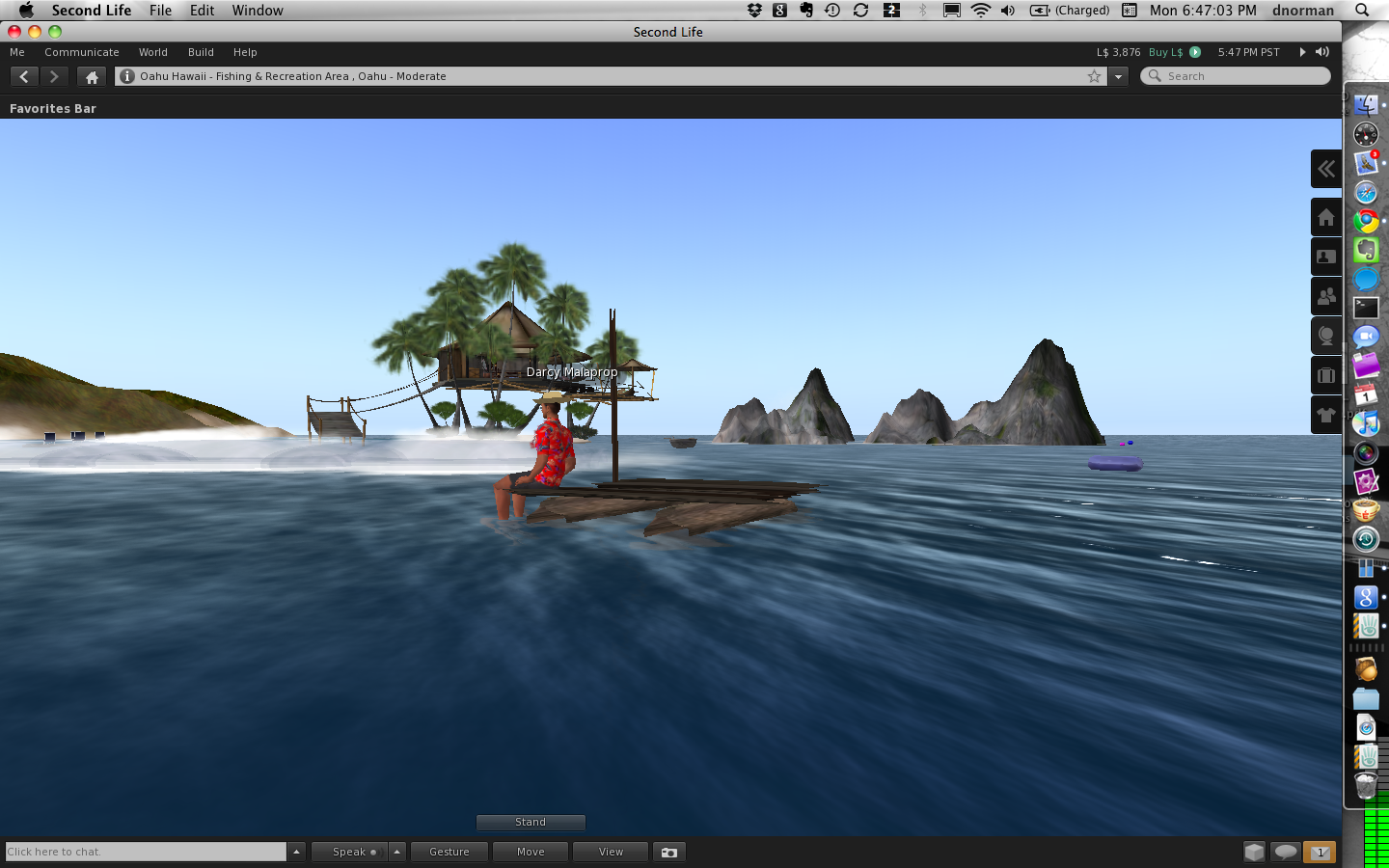
The Boy™ wanted to explore Second Life this evening, so we fired up the new SL2 beta client, and went to (virtual) Hawaii, before spending some quality time at the NASA education island. I’m a little scared at how easily he picks it up…
a discussion board post for my “conceptualizing edtech” course, archived for posterity. It was written for an audience (fellow students in the course) that may not have much background in living online, so I settled for using terminology they may have seen before. It’s also supposed to be a brief post, so I didn’t go into anywhere near the depth I could/should have…
Three pressing challenges for learners in creating and using technology in an educational context.
1. control and ownership
If we learn what we do, then we can extend this philosophy to educational technology. Students are now able to “do” their own technical infrastructure, meaning they can be in control of what they use, how they use it, why, where, and for whom. This shift toward being able to manage a personal cyberinfrastructure sets up students to be able to function far more effectively on their own, without needing the constraints necessary for institutionally provided and supported infrastructure.
Rereading Alan’s post on his blog hiatus, where he takes a month off of posting on his blog to comment elsewhere, I was struck (as always) by the patterns in activity he described. I decided to take a closer peek at the activity on my own blog - I’ve been thinking a lot about discourse analysis lately, so it’s at least partially non-navel-gazing.
Here’s the graph for the first few years of life for my blog. It started out as a private, personal outboard brain, then kind of took off with a life of its own.
After previously saying I wouldn’t go to a TEDx event because of the way they’re set up, I’m happy to post that they don’t have to be that way.
Registration for TEDxUofC is open, and cheap. Students get in for $5. Everyone else gets in for $10. It doesn’t get cheaper than that. And there’s no “how awesome are you?” filter on the registration. You prove your awesomeness by showing up.