Pages
Colophon
This website has been online in various forms since 2002, and is currently powered by:
Editing
- BBEdit text editor
- Obsidian markdown editor
- Acorn image editor
- Photos photo library
- iCloud file storage/sync
- NetNewsWire RSS reader
- Audacity audio editor
Publishing
- GoHugo (version 0.168.0) static website generator (run on macOS, via homebrew)
- Custom theme
- Custom search engine with SQLite/PHP running on my server.
- PhotoBlogger - custom app for processing images for publishing to my /photos section. Captions and tags are generated using Claude Opus 4.8.
- rsync to upload the generated website
- Cyberduck ftp/sftp transfer
- Standalone RSS Mastodon Bridge - lightweight self-hosted application that posts newly published items to a Mastodon account.
Hosting
- FullHost (Canadian non-cloud-based web host with servers in Calgary)
- Custom standalone comments application (self-hosted, no external dependencies)
The combination results in a pretty high-performing website (last tested by PageSpeed on September 22, 2026):
Read MorePrivacy
This website doesn’t track anything, and doesn’t set any cookies. I don’t track statistics beyond what is done by the Apache webserver. I occasionally look at high level statistics through CPanel’s Bandwidth tool, or through Analog or AWStats processing of the Apache webserver logs.
Search functionality is provided by a custom SQLite/PHP application running on my own server. It doesn’t track anything about any queries, beyond the normal Apache webserver logs of pageviews - but those are anonymous. It runs on this server, doesn’t track anything, doesn’t share anything, has no ads or algorithms or whatnot. It just does search.
Read MoreSubscribe
RSS Feeds
If you want everything, use the main feed. If you only want certain kinds of posts, each section has its own feed – subscribe to whichever ones suit you.
What's RSS?
RSS is a simple way to follow websites without social media or email newsletters – your updates come to you, in one place, on your terms. An RSS app (sometimes called a “reader”) checks your favourite sites automatically and shows you new posts as they arrive, a bit like email but just for reading.
A few good RSS apps to get started:
- NetNewsWire – free, Mac and iOS, very polished
- Feedly – free tier available, works in any browser
- Inoreader – free tier available, browser and mobile apps
- Reeder – paid, Mac and iOS, beautifully designed
Once you have an app, just paste any of the feed links below into it and you’re set.
Curriculum Vitae
D’Arcy Norman, PhD
Calgary, Alberta, Canada
Education
PhD, Computational Media Design - University of Calgary
Dissertation: The Teaching Game: Integrating HCI and SoTL By Adapting Video Game Research Methods (pdf download)
Master of Science, Educational Technology - University of Calgary
Thesis: A Case Study Using the Community of Inquiry Framework to Analyze Online Discussions in WordPress and Blackboard in a Graduate Course. (pdf download)
Bachelor of Education, Secondary Science - University of Calgary
Read MoreAbout
 I work in teaching and learning at the University of Calgary, where I’ve spent most of the last three decades in various roles at the intersection of course design, learning technologies, and institutional decision-making. Currently I’m Associate Director of Learning Technologies and Design at the Taylor Institute for Teaching and Learning, where I lead a team that supports faculty across instructional design, educational technology, and pedagogy.
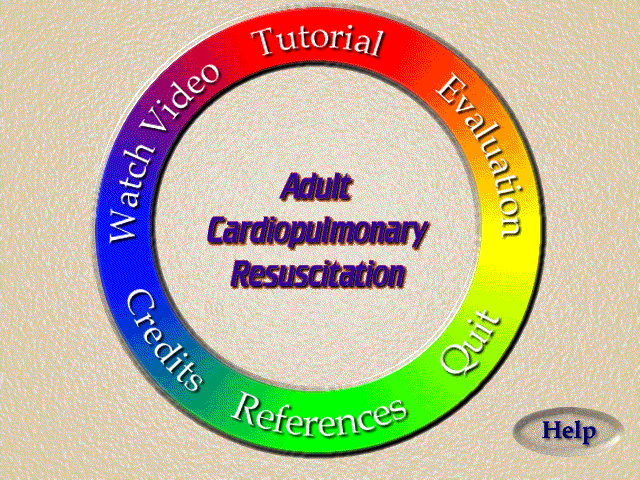
Adult Cardiopulmonary Resuscitation
(1995-1998)
Developed with Jon Ross, using the multimedia training software I created for the Psychomotor Skills series.
Screen recording video demo
Screenshots


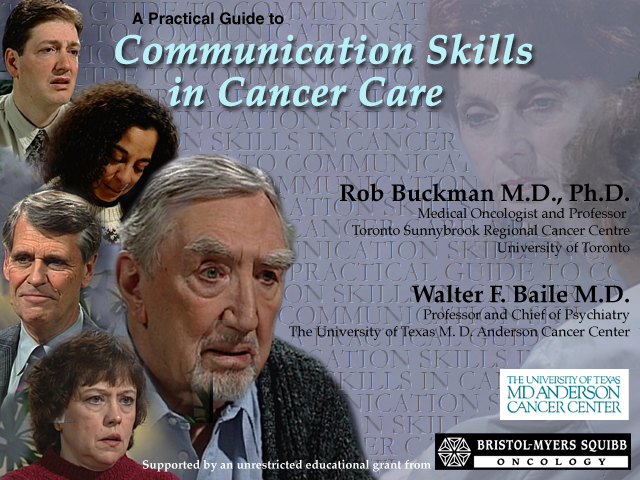
Communication Skills in Cancer Care
(1995-1998)
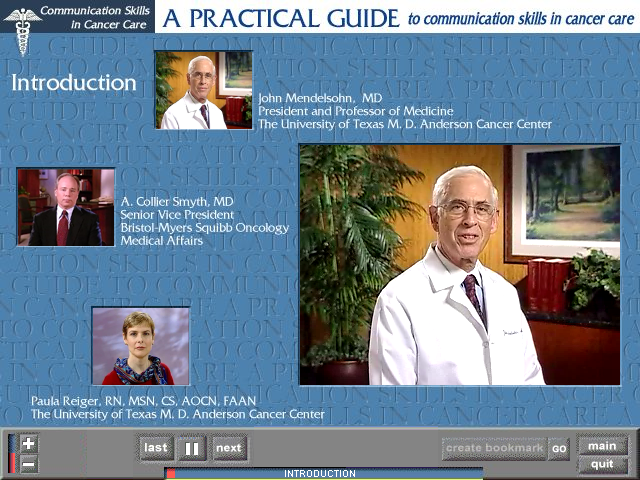
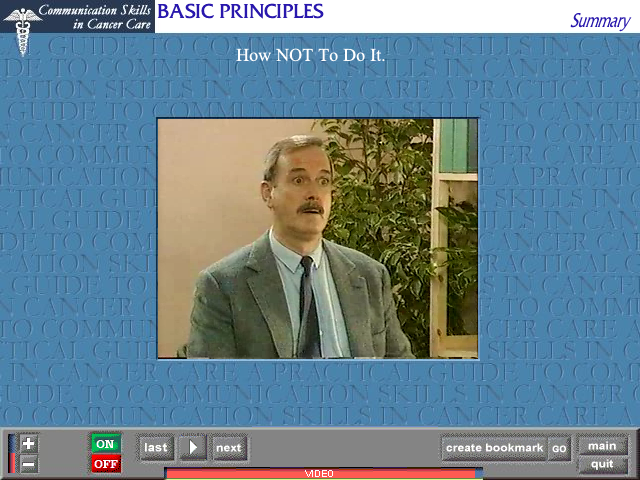
Developed using the CD-ROM multimedia training platform I built for the Psychomotor Skills series, this was a collaboration with the UTexas MD Anderson Cancer Centre and Brystol-Myers Squib Oncology. We worked with Medical Audio Visual Communications to produce this title, featuring John Cleese (from, well, John Cleese) and Dr. Robert Buckman (from Toronto Sunnybrook).
Screenshots


Psychomotor Skills CD-ROMs
(1995-1998)
I developed a multimedia database and media management system (in Macromedia Director) that was used to produce a series of award winning psychomotor skills CD-ROMs for the Faculty of Nursing at the University of Calgary. The CD-ROMs were commercially sold through Medical Audio Visual Communications, Inc.
Care of a Nasogastric Tube
Screen Recording Video Demo
Screenshots

Alberta Science Centre Hypercard Stacks
From 1992-1994, I worked as a science communicator at the Alberta Science Centre. As part of my work there, I developed some Hypercard stacks to support various exhibits. These were inspired by projects such as Just Grandma and Me (providing opportunities for exploration, searching, and memory) as well as the Mackerel Stack and others.
Exhibits included:
- Dinomania
- Marine Monster Mania
- Backyard Monsters
- Cybersense
Unfortunately, I have no documentation of these stacks1. I think there might be remnants on a floppy disk in storage, but there is no way to retrieve that anymore. I’ve been unable to find anything about the exhibits online, either. This was just before the internet became a real thing - at the time, we were using Compuserve to access NASA’s images from Shoemaker-Levy 9 as part of the science centre’s programming…
Read MoreCAREO - Campus Alberta Repository of Educational Objects
(2001-2007)
This was the first fully-functioning prototype of a standards-based learning object repository, and served as a testbed for the evaluation of repositories, metadata standards, and institutional collections of learning resources. Some project info is available on at careo.org1
I built the application in java, using Apple WebObjects. This allowed rapid prototyping and development through the MVC separation which was kind of revolutionary at the time.
From the CAREO project website:1
Read MoreCampus Alberta’s vision is to enable Albertans to take courses from any college or university in the province, either on-site, on-line from their homes, or on the job. CAREO’s contribution will be to provide educators with the digital teaching content to make this flexible learning a reality. We will accomplish this not only by providing a location to share and find resources, but also by fostering an online community of educators whose digital materials, expertise, and experience will be exchanged. Although the collected teaching materials will be available to all, those who register as members in this community can contribute their own materials, review existing resources, and contact other members with similar interests.
CAREO has developed through four closely-related principles:
- The reuse of modularized educational resources or learning objects.
- The organization of these resources through standardized metadata.
- The provision of single-click access to these resources through a distributed repository architecture.
- The continued development and enhancement of these resources through quality control, peer review, reward and support practices.
DiscoverWare Nova
From 1998-2001, I worked at DiscoverWare, Inc - a Calgary-based eLearning company with customers around North America, Europe and Australia. The “Nova” product line was a rich-media software simulation learning management system, based on 3-tier client/server communication. I built the client-side data and user activity tracking layers, which then communicated with a client user interface layer, and a server for long-term storage of user progress data.
Screen recording video demo
Screenshots of menus and content
 Main menu - with status indicator to show content you’ve already viewed.