demo of “immersive” 360˚ video
and, the raw 360˚ video, which should play back in Chrome or on a Daydream/Cardboard-enabled phone. And probably on an actual VR platform…
and, the raw 360˚ video, which should play back in Chrome or on a Daydream/Cardboard-enabled phone. And probably on an actual VR platform…
I’m still not sure how to fully describe what I’m trying to do. At the most basic level, I want to find ways to apply technologies and practices to support and enhance reflection by people as they learn the craft of teaching. That’s what prompted the Nao robot study, and the various types of media (text, video, cartoon video, audio, synthetic audio…).
In a perfect world, what would this look like? I imagine capturing a teaching and learning session (a classroom session, a field trip, a laboratory activity…) volumetrically. The shape of the spaces. The shapes of the participants. The flow of participants throughout the session. The content on various displays and devices as used during the session. The video/texturemap and audio of the session. To capture everything. Multimodal, multisensory, volumetric capture of an event.
Dr. Märtensson's research formed much of the foundation of the plan for the Taylor Institute. Specifically, the macro/meso/micro layers within an organization, and working with each layer in various ways to draw people into the community. Her keynote at the 2017 University of Calgary Conference on Post-secondary Learning and Teaching was great, and nicely connected many of the threads of the conference.
This video is a great intro to our new College of Discovery, Creativity, and Innovation (CDCI), within the Taylor Institute for Teaching and Learning. The Global Challenges course that was offered this year was an incredible and inspiring experience, where first-year students came together in an interdisciplinary research context to explore what it would take to feed 9 billion people.
Alexis Madrigal, writing in The Atlantic:
Nowadays, (hyper)linking is an afterthought because most of the action occurs within platforms like Facebook, Twitter, Instagram, Snapchat, and messaging apps, which all have carved space out of the open web. And the idea of “harnessing collective intelligence” simply feels much more interesting and productive than it does now. The great cathedrals of that time, nearly impossible projects like Wikipedia that worked and worked well, have all stagnated. And the portrait of humanity that most people see filtering through the mechanics of Facebook or Twitter does not exactly inspire confidence in our social co-productions.
We tried something new (for us) this year, and had an Ignite session during the Taylor Institute's annual conference. It was a risk, as we had never hosted that format before, and none of the 6 presenters (for 5 presentations) had ever done an Ignite. Nevertheless, we persisted.
I got talked into being the (humble) host for the event, introducing the format and acting as emcee between presenters. Each presenter provided their slides earlier in the week, so I had time to smush them all into one master presentation file and apply the automatic slide progression for their decks.
I recorded 3 mini-lessons as part of the HRI course study – myself, Ahmed, and Sowmya. Here are some of the sample media from Ahmed’s session.
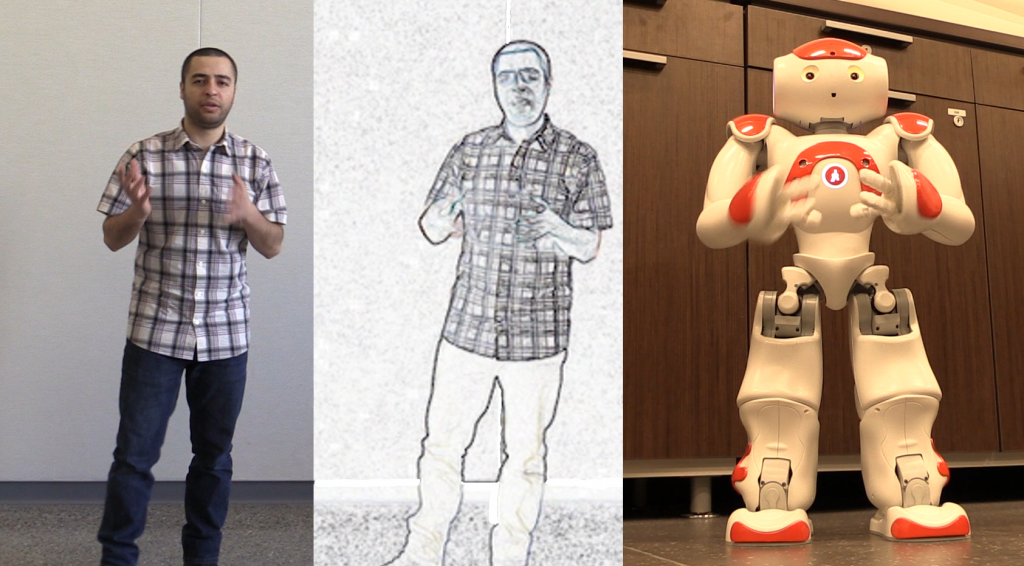 ][1]
][1]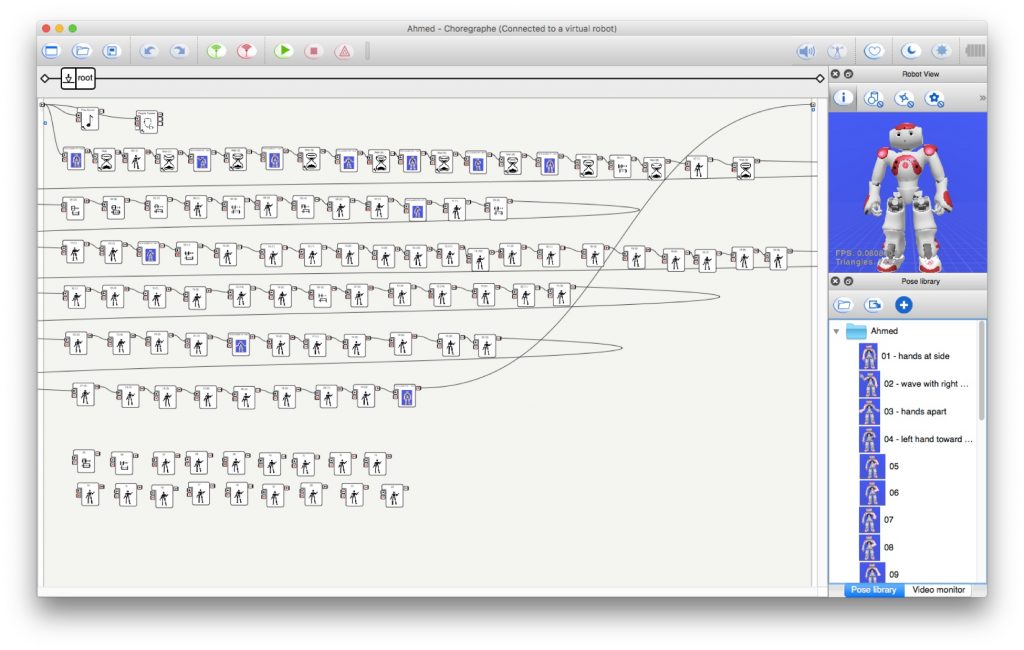 ][2]
][2]Videos: (password: cmd)
The push for educational technology exists within a broader political, economic, ideological, and technological context. The all-too-common ignorance of this context and the subtleties of learning itself may prove problematic for edtech — and higher education's future.
The article is a really good one, and points to the broad issues with the disruption-of-education-by-silicon-valley narrative (one which has been championed by Audrey Watters for years, and which also overlaps with the work that Stephen Downes has been doing forever).
But for as popular as immersive theater has become, it hasn't solved its scale problem. Productions like Then She Fell offer incredible intimacy between the actor and viewer, but to do so, they only fill 15 seats a night. That means a year of shows can accommodate less people than a single movie theater for half a day.
A few years ago, creator Jennine Willet was having drinks with 14 creatives at Disney who worked on park attractions. They'd come to see how she crafts plays like Then She Fell. "They were like, I loved that scene with [redacted], how could you make that for 600 people?'" she says. "I think I spit my cosmo. I said, ‘I think that's a paradox. I don't think you can have intimacy with 600 people.'"In person, that's probably true. In VR? That rules of intimacy can change
This process is interesting, but WAAAAAY too intrusive to capture a session or performance without drastically altering it in the process.
A startup imaging company called 8i has been publicly crowing about its volumetric capture system for over a year, and it has used festivals like Sundance, film properties like Mad Max, and stars like Jon Hamm to excite VR newbies. Put this headset on and look-ee-here, you’re really next to other people! Neat.
OK – this may be a bit out there, but I’ve got an idea for the HRI project, as a way to explore emotional context and connection with an audience.
J. Alex Boyd wrote a piece for McSweeney’s back in 2006, “Jokes made by robots, for robots.” Some profoundly unfunny jokes, unless they’re performed by a robot.
I’m thinking – I can have a human performer read the jokes as a stand-up comedy act, recording the performance in video. I can then use the video as source material (for movements, positions, gestures, timing), and reproduce the performance with a Nao robot (using the text-to-speech for the actual robot voice). I’m picturing the performance as being somewhat deadpan – in the genre of Steven Wright’s act.
 We've been in the Taylor Institute for Teaching and Learning's new building for almost a year now, and it's time to step back and reflect on what we've learned through that first year.
The building itself is a marvel of architecture, design and technology. We're extremely fortunate to be able to go to work there every day. It's been a constant source of inspiration - not the building, but the amazing things that instructors, students and staff are doing within it, together, on a regular basis.