D'Arcy Norman, PhD

Recent Posts

Joining the TRU Digital Detox program

Joining the TRU Digital Detox program

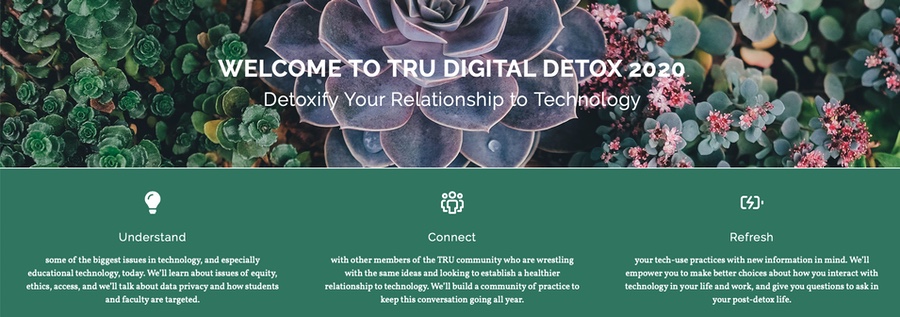
I’m following Brian’s lead, and signing up for the TRU Digital Detox program that will run throughout January 2020. I’m not sure my health plan covers the cost of a full rehab, so this will hopefully serve to help nudge me toward thinking about my relationship with online technologies.

Brenna Clarke Gray has been setting up some really interesting work in her new role at TRU (and, really, the whole TRU Open Learning team is doing some seriously awesome work). I’m looking forward to learning more from them throughout the detox.

Read More

Notes: Juul, J. (2005). half-real

Juul, J. (2005). Half-real. Video games between real rules and fictional worlds.

(some additional notes by Manfred Thaller are available online)

p. 6: What a game is

Classic game model has 3 parts:

  1. a rule-based formal system
  2. with variable and quantifiable outcomes
  3. where different outcomes are assigned different values

Can game design be a game as well? a meta-game that meets these criteria while designing a game? Are academic courses formal games? (or does the lack of abstraction and fiction mean that these are not formally games?)

Read More

2019 Week 52

I’ve been wanting to restart these week-in-review reflective posts - and wanting to get back to more reflective practice in general. There are things I won’t be able to document here, but there’s a lot that I can, and I need to get back into this practice.

One thing that made me stop doing week-in-review the last time, was the weekly cadence of posts quickly overwhelmed any other blog posts. My blog turned into a diary, and I didn’t like that. This time, I’m using a separate content type reflections for this, with posts in their own section, with their own feed. This way, I can post weekly reflections without messing up the main page or feed.

Read More
Moving beyond the LMS as platform of content consumption

Moving beyond the LMS as platform of content consumption

I’ve had the opportunity to work with leaders from various faculties, to develop work plans for developing communication/support, inventory, and procedures that are involved in providing and integrating learning technologies into courses. There are a few themes that keep coming up (paraphrased):

  1. we need to be led by pedagogy, not technology
  2. our tools shape what we do with them
  3. campus platforms are designed for the institution, not the people within
  4. our processes for requesting/implementing new tools can be prohibitive and stifling

Looking at Brightspace, our campus LMS1 is automatically available for use by every course, in every faculty. If a course exists in Peoplesoft, the instructor is able to activate a course site in Brightspace and use it for whatever they need. The courses are customized slightly for each faculty (some navigation tweaks, some default content, maybe some grade schemas…). The instructor then builds the course - adding course content, setting up discussion boards, gradebook, assignments.2 Then, typically on the first week of the semester, the instructor activates the course and students can access it.

Read More

2019 media log

I didn’t really track my media consumption in 2019 - most of this was pulled together from watch history in various platforms, and from memory. So, likely huge gaps in there. My non-work reading was pretty sci-fi focused - I need to branch out a bit there, maybe after book 9 of Expanse comes out…

Anyway. Here’s most of the media I consumed in 2019.

Read More
On 2019 and looking forward to 2020

On 2019 and looking forward to 2020

2019 was a year for the record books. Looking back, it was basically a constant stream of life-altering challenges (many of which were profoundly unbloggable), but we got through everything and are thriving as we go into 2020.

Looking back at 2019…

Ringing the bell after finishing chemoI went through chemo. But, I made it through and am now stronger than I’ve been in years. And, when it does come back, I know that we have a plan in place and that it works. Hopefully, we won’t have to test that for another 5-10 years.

Read More

Notes: Wermeskerken et al. Effects of Instructor Presence in Video Modelling Examples on Attention and Learning

van Wermeskerken, M., Ravensbergen, S., & van Gog, T. (2018). Effects of instructor presence in video modeling examples on attention and learning. Computers in Human Behavior, 89, 430-438. https://doi.org/10.1016/j.chb.2017.11.038

Does including a video that includes a view of the presenter add (through instructor presence) or detract (through distracting the viewer by forcing them to split attention)? This paper takes a look at a specific design pattern - an instructor presenting some content in a presentation - and uses eye tracking to observe where a viewer’s attention is focused during the video, and tries to assess the impact on learning (using pre/post test scores as a proxy). Is the a deeper connection through social response stronger than the “split attention effect” where viewers are automatically drawn to look at a human face rather than the content in a presentation? Does working memory1 get messed up by having the instructor visible (but separate from the content)?

Read More

On Blockchain Disrupting Higher Education

Martin Weller wrote a response to The Chronicle’s (paywalled) piece by Richard DeMillo on blockchain disrupting education. Martin’s right in pointing out that many of the hoped-for disruptions are actually possible using existing technologies and practices (eportfolios, badges, etc.) without “disruption” needed. Martin has written about disruption before.

Blockchain will certainly be used in higher education. It will transform how some things are designed and run. In the same way that relational databases have - Moodle (or even MOOCs 1) wouldn’t have been possible without MySQL. Blackboard wouldn’t have been possible without Oracle (or whatever SQL engine it runs on). Relational databases transformed how courses were offered by higher education institutions, without disrupting the institutions themselves.

Read More

Resources for evaluating learning technologies

Our Learning Technologies Advisory Committee met last week to start to brainstorm what the current issues on campus are, with respect to learning technologies. One of the key themes was a need to systematically evaluate learning technologies to make sure we understand what people need to do, and how the tools/supports/resources can best meet those needs. After the meeting, I was asked to pull together some links to resources that can be used to help evaluate learning technologies from an instructor/admin and student perspective.

Read More

On moving my blog to Hugo

After finally deciding to throw caution to the wind and move my webstuff back into a static format, this website finally landed on Hugo. I did an initial migration from WordPress to Jekyll, which looked really promising but took waaaaay too long to generate the 2,800+ posts for this site (taking almost 45 minutes?). Hugo runs as a native application, and runs MUCH faster. Generating the entire site currently takes less than 5 seconds, then uploading it to the server via rsync takes only a little longer.

Read More

Moving my blog to Hugo

After many, many, many years running my blog on WordPress, I finally got tired of fussing around with convincing it to do what I want it to do, and trying to get it to perform well enough to not have to wait 20 seconds for page loads. I’m also wanting to shift away from hoarding all of my content online.

I had been experimenting with Jekyll, but it was so unbelievably slow to generate the static HTML for this site that I had to give up on it. I’m now running on Hugo. It’s a native binary application that runs on my laptop, so generation is really fast. It took less than 4 seconds to generate the full website for all 2,818 posts for this blog!

Read More
Mastodon